No trip to Tuscany's Val d'Orcia region is complete without a stop in the picturesque town of Pienza, Italy. Designed in the 15th century as a model Renaissance city, Pienza was one of my favorite stops during my visit to this part of Tuscany.
If you're planning a visit, read on for everything you need to know before you go, including the best things to do, where to eat, and my hotel recommendations.
Is Pienza Worth Visiting?
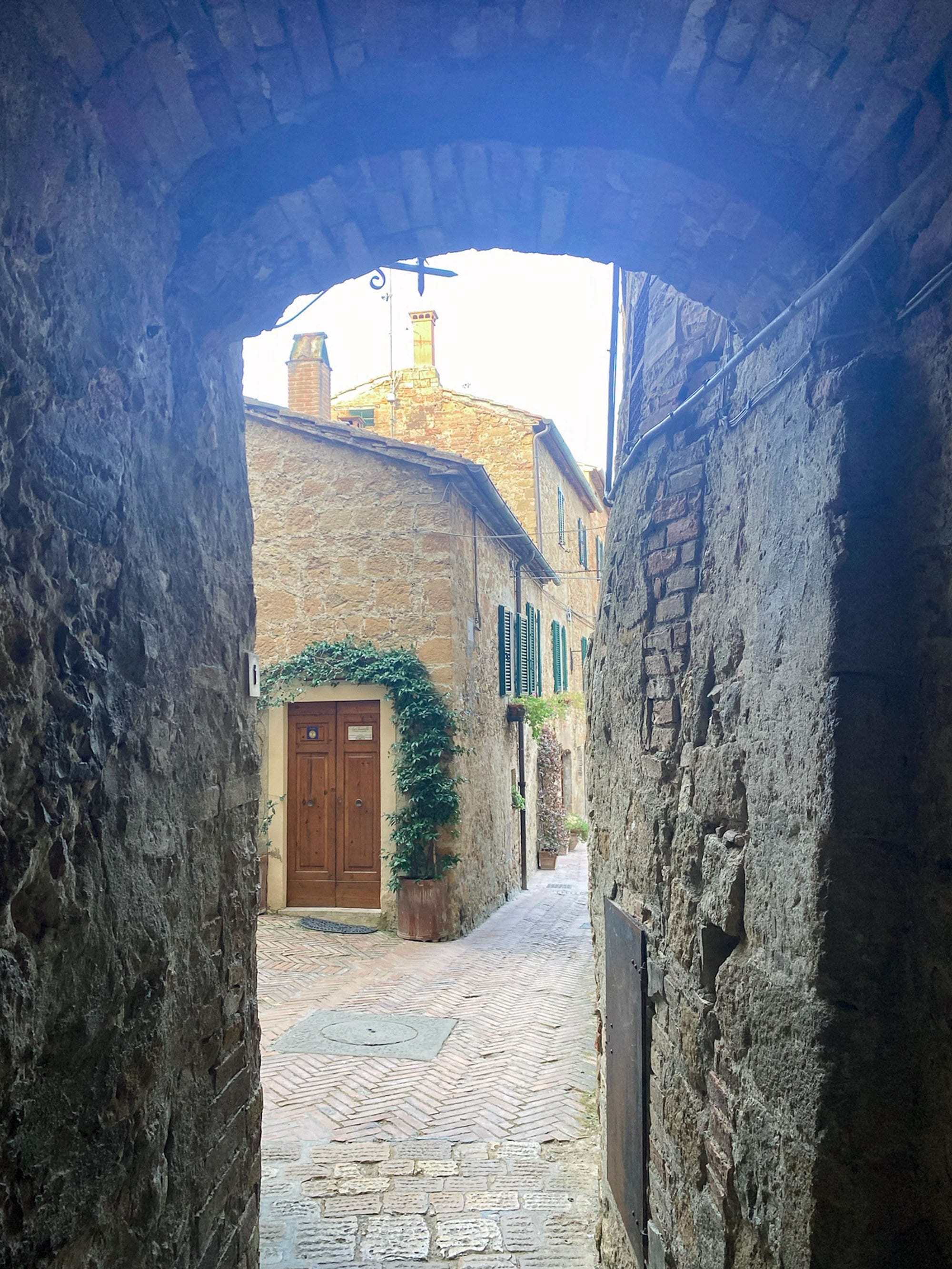
Definitely! Along with nearby Montalcino and Montepulciano, Pienza is a must-visit when exploring Tuscany's Val d'Orcia region. It's one of the prettiest towns in Tuscany, with beautiful medieval architecture, ivy-covered buildings, and lovely streets to explore.
One of the most interesting things about Pienza is that it wasn't always called Pienza! It was originally a small medieval village named Corsignano, where Pope Pius II was born in 1405. After becoming pope in 1458, he set out to transform his birthplace into what he envisioned as the ideal Renaissance city. He commissioned architect Bernardo Rossellino to redesign the town center, including the beautiful Piazza Pio II and the impressive buildings surrounding it. As part of the transformation, he renamed the village in his own honor. The name derives from his papal name, Pius, and is often translated as "city of Pius."
Much of that original design remains intact today, and Pienza was designated a UNESCO World Heritage Site in 1996 in recognition of its significance in Renaissance urban planning.
How to Get to Pienza
Pienza is located in the heart of Tuscany's scenic Val d'Orcia region, and while you can reach it by car or public transportation, I recommend having a car if you want to explore the surrounding area. I had a car during my visit, which made it easy to see not only Pienza but also nearby towns like Montepulciano and Montalcino, along with the beautiful countryside in between. Some of the best views in the Val d'Orcia are along the roads connecting these little towns, and having the flexibility to stop whenever something caught my eye was part of the experience.
If you're driving to Pienza, here are approximate travel times from a few of the region's main starting points:
- Florence: 1 hour 45 minutes to 2 hours
- Rome: Approximately 2 hours 30 minutes
- Siena: Approximately 1 hour to 1 hour 15 minutes
ZTL and Parking in Pienza
One thing to know before driving into Pienza is that the historic center is a ZTL, or Zona a Traffico Limitato, meaning vehicle access is restricted. In Pienza, the ZTL is active 24/7, and access is monitored by cameras. Unless you have the proper authorization, don't drive through the gates or into the historic center.
Instead, follow the signs for public parking just outside the historic walls. From there, it's only a short walk into town.
Things to Do in Pienza
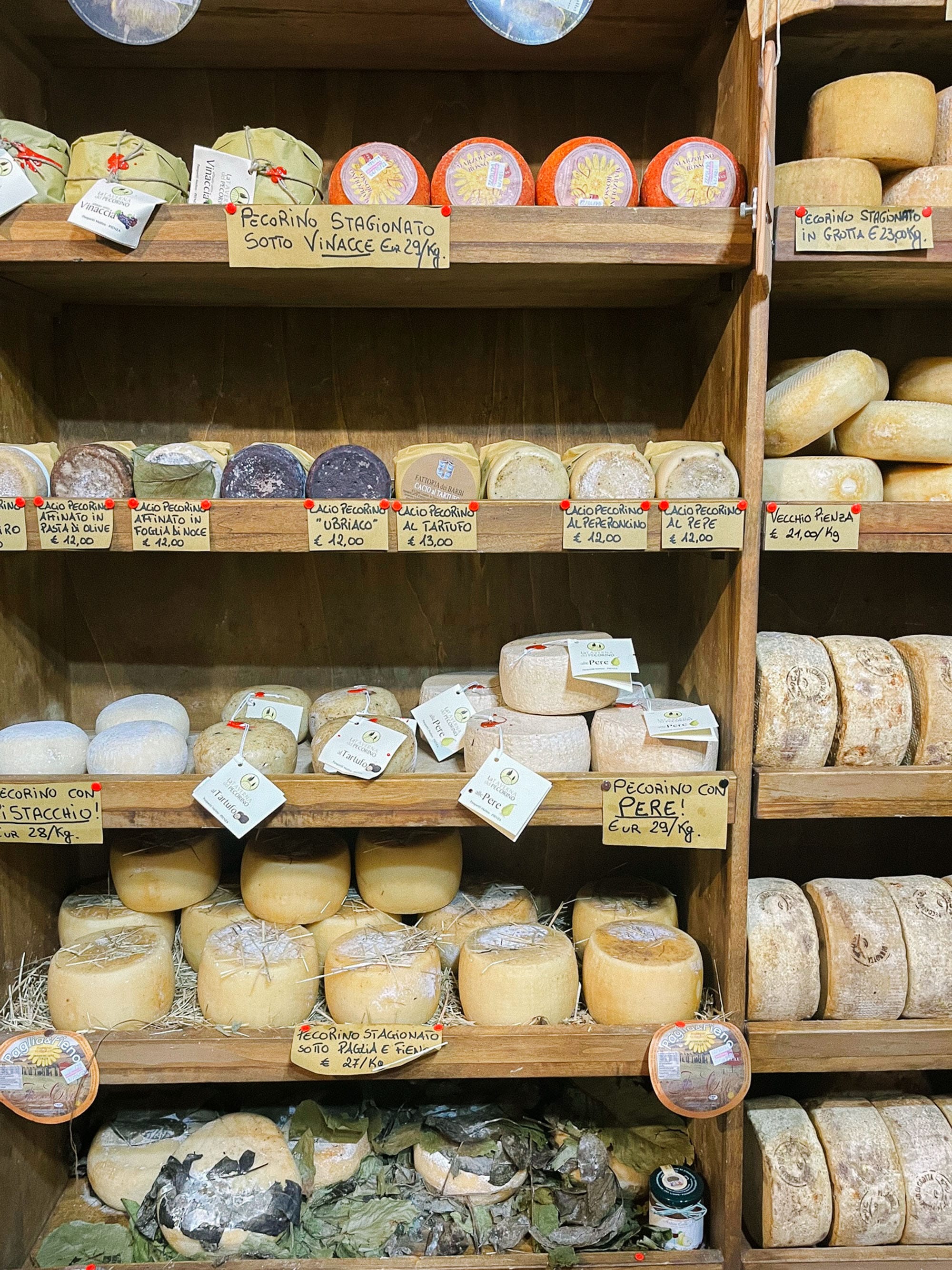
If you're visiting Pienza as part of a longer stay in Val d'Orcia or a day trip through the region, you only need a few hours to explore. I loved wandering the historic center, visiting the local shops, sampling Pecorino di Pienza cheese, and taking in the views of the surrounding countryside. If you have a car, there are also a couple of beautiful spots just outside town to add to your list.
Stroll Along Corso il Rossellino and Piazza Pio II
Start your visit along Corso il Rossellino, Pienza's main street and one of the prettiest places to wander in town. It's lined with Renaissance buildings, little shops and restaurants.
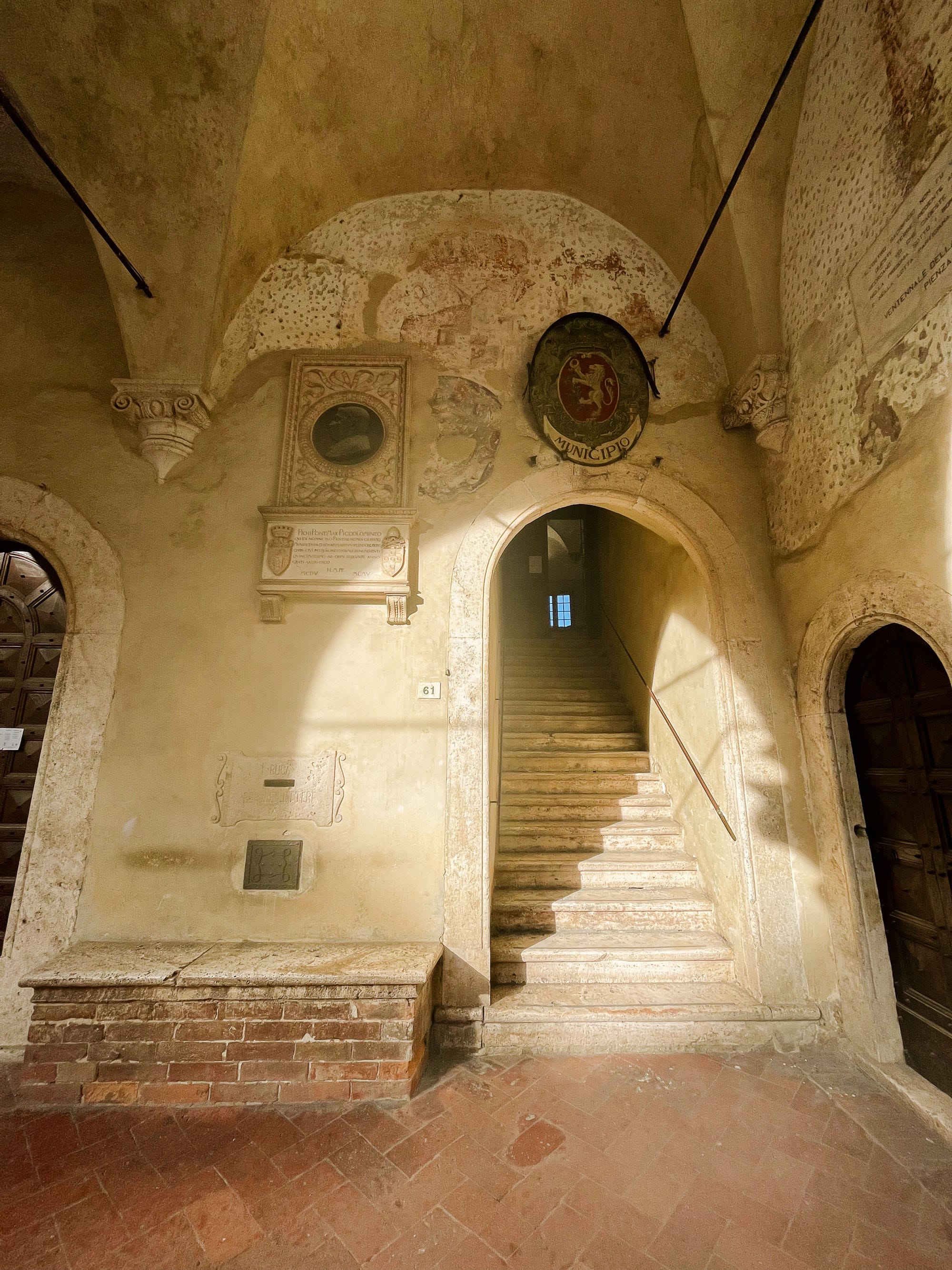
The street leads directly to Piazza Pio II, the heart of Pienza's historic center. The square was designed in the 15th century as part of Pope Pius II's vision for an ideal Renaissance city. It's surrounded by several of the town's most important buildings, including the cathedral, Palazzo Piccolomini, and Palazzo Comunale, pictured above.
Visit the Cathedral of Santa Maria Assunta
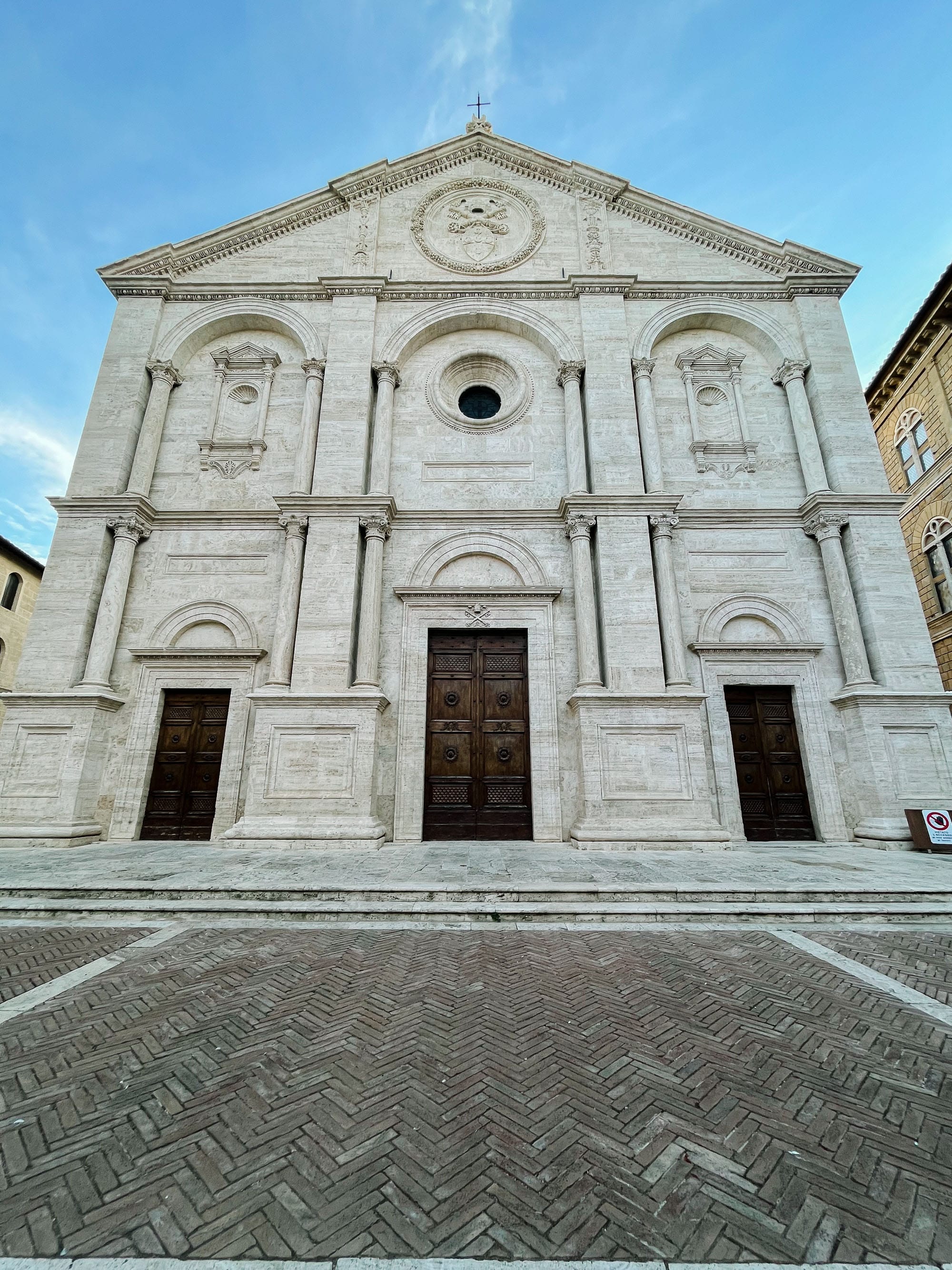
Also known as the Duomo di Pienza, the Cathedral of Santa Maria Assunta sits right on Piazza Pio II. Commissioned by Pope Pius II and built between 1459 and 1462, the cathedral is an interesting mix of architectural styles. Its exterior has a distinctly Renaissance appearance, while the interior reflects the late Gothic style of churches in southern Germany.
The cathedral is relatively simple compared to some of Italy's more elaborate churches, but it's worth stepping inside to see its artwork and architecture.
Visiting information: Admission is free. The cathedral is generally open daily from 8:00 AM to 1:00 PM and 2:30 PM to 7:00 PM. Hours may change for religious services and special events, so check before visiting.
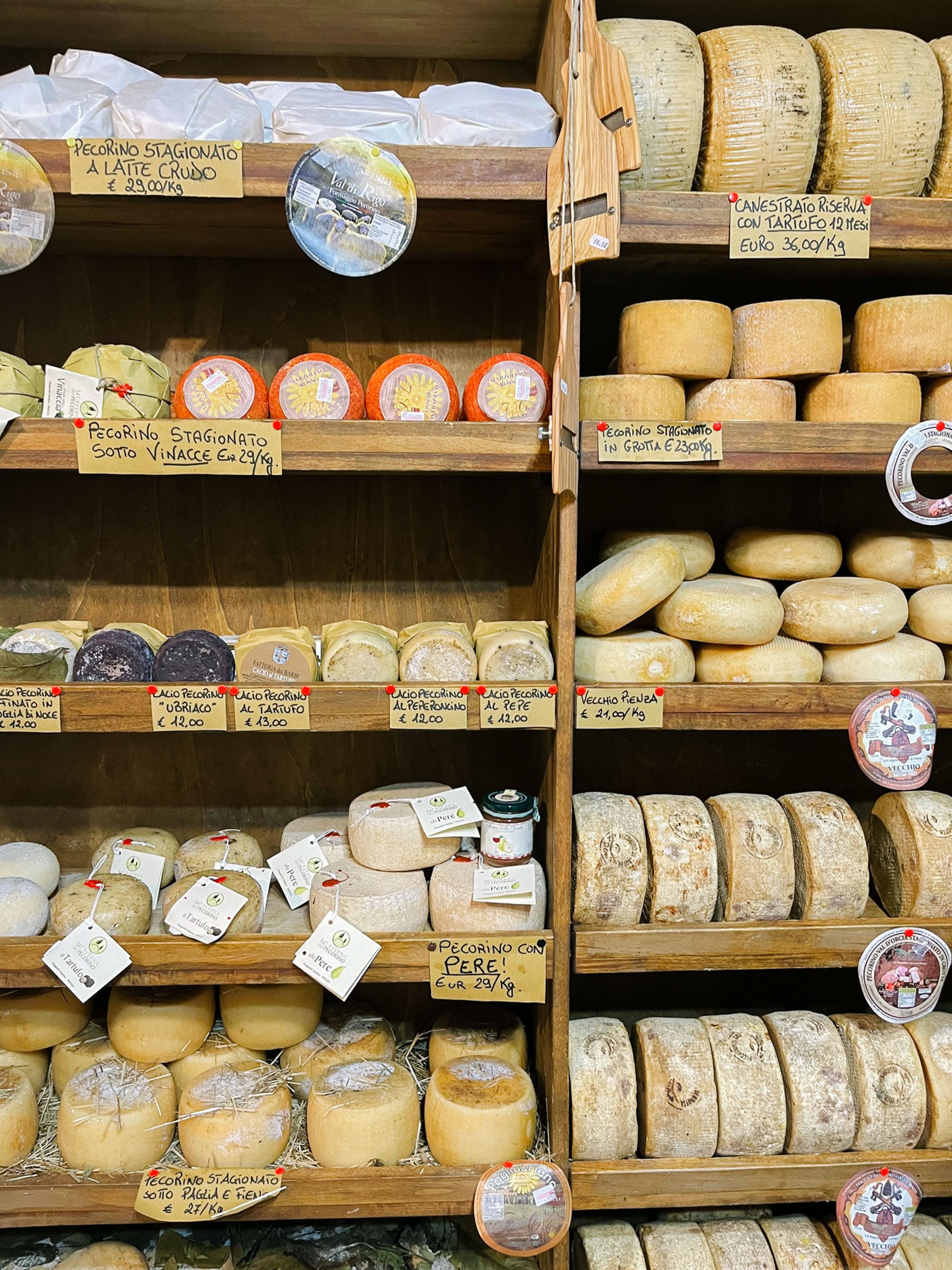
Shop for Pecorino di Pienza
You can't visit Pienza without sampling its famous pecorino cheese! Pecorino is a traditional Italian cheese made from sheep's milk, and the variety produced around Pienza is especially well known throughout Tuscany. The area's sheep graze on pastures filled with wild herbs and grasses, which contribute to the cheese's distinctive flavor.
You'll find plenty of shops along Corso il Rossellino selling different varieties, and most let you sample before purchasing, which is always helpful! Pecorino di Pienza comes in several styles depending on how long it's aged. Younger cheeses tend to be softer and milder, while aged varieties have a firmer texture and more pronounced flavor. Some are also aged with ingredients like walnuts, grape juice, or herbs.
If you enjoy Italian cheese, this is one of the best local specialties to bring home. We purchased a whole wheel to take back with us, and it was one of our favorite "souvenirs" of the trip! If you're planning to travel with cheese, let the shop know so they can vacuum-seal it for you. (And consider planning your suitcase space accordingly... my husband and I had to purchase a whole suitcase to accommodate the wheel of cheese, but it was worth it!)
Visit Cappella della Madonna di Vitaleta
If you've seen photos of the Val d'Orcia, there's a good chance you've come across Cappella della Madonna di Vitaleta. This small stone chapel, framed by two rows of cypress trees and surrounded by rolling Tuscan hills, is one of the most recognizable views in the region.
Located between Pienza and San Quirico d'Orcia, the chapel is an easy stop if you're exploring the area by car. From the main road, follow the signs toward Vitaleta and park in the designated parking area. You'll then need to walk approximately one kilometer along a gravel road to reach the chapel. Here is a map of the exact location in case that's helpful.
The chapel dates back centuries, although its current appearance is the result of a 19th-century restoration. It's a beautiful place to stop for photos and take in the surrounding landscape.
There is no standard admission fee or published daily opening schedule for the exterior viewpoint. Parking and access arrangements can change, so check locally before making the drive.
Take a Drive Along the Val d'Orcia Road
If you have a car, don't limit your visit to Pienza's historic center. Some of the most beautiful scenery in Tuscany is found along the roads winding through the Val d'Orcia, and I loved having the flexibility to explore at my own pace.
The SP146 between Pienza and San Quirico d'Orcia is particularly scenic, with rolling hills, cypress-lined roads, and classic Tuscan farmhouses along the way. It's also the route you'll take to reach Cappella Vitaleta. Give yourself extra time to stop at the designated pull-offs and viewpoints to take in the views.
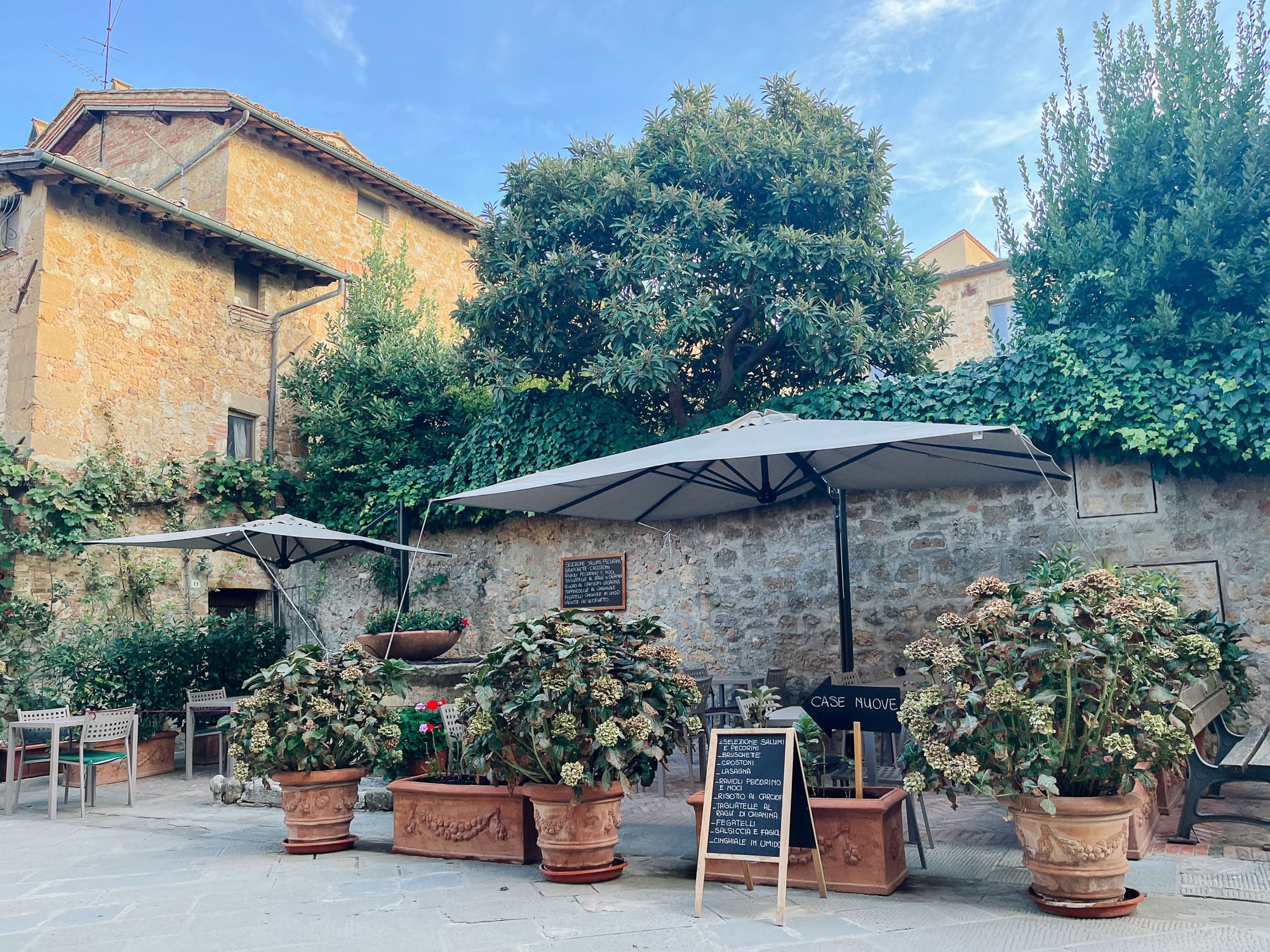
Where to Eat in Pienza
Pienza has some of the best restaurants in Val d'Orcia, so consider planning to be there for lunch or dinner to capitalize on the options. Here are a few of my favorites.
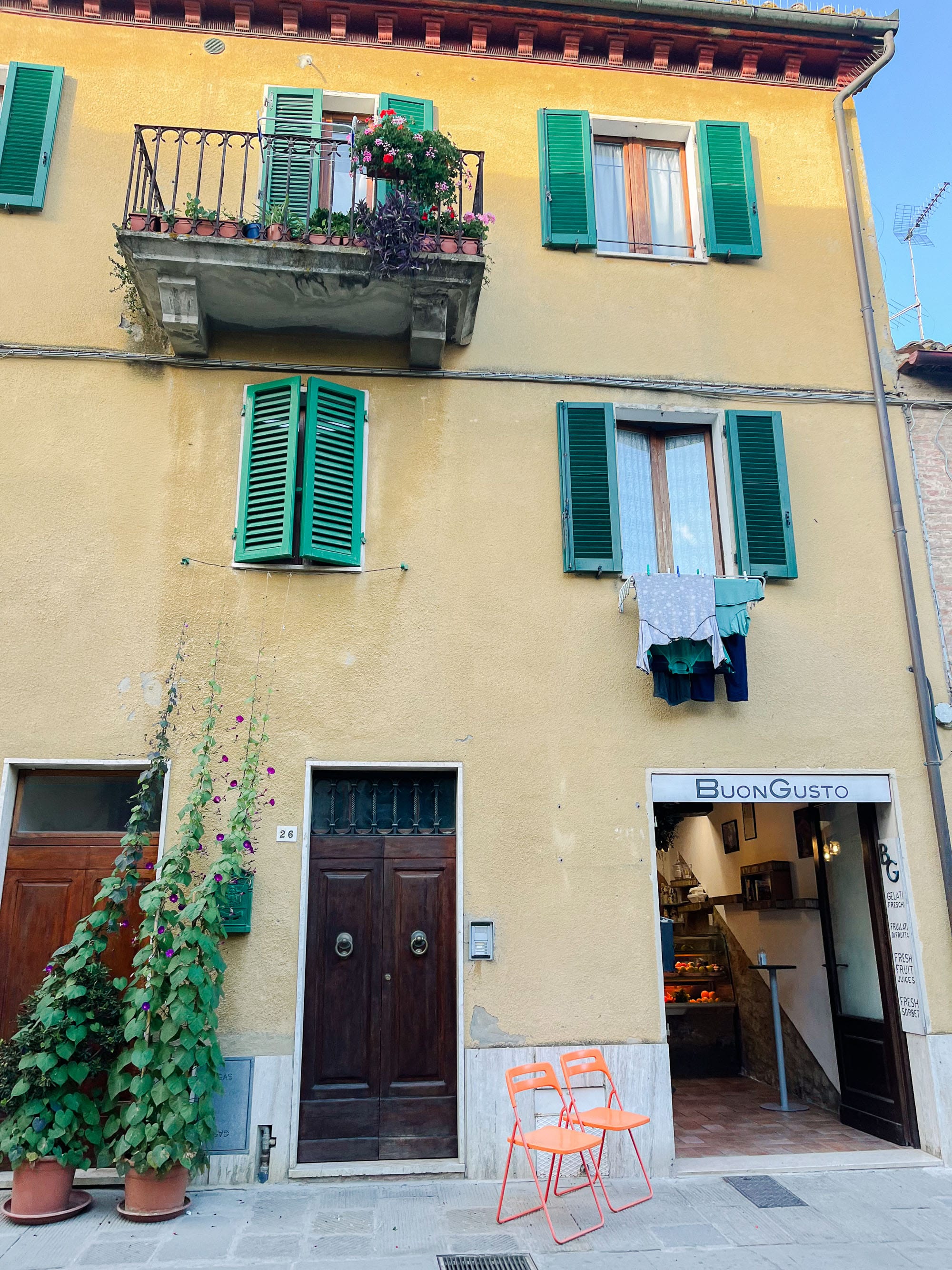
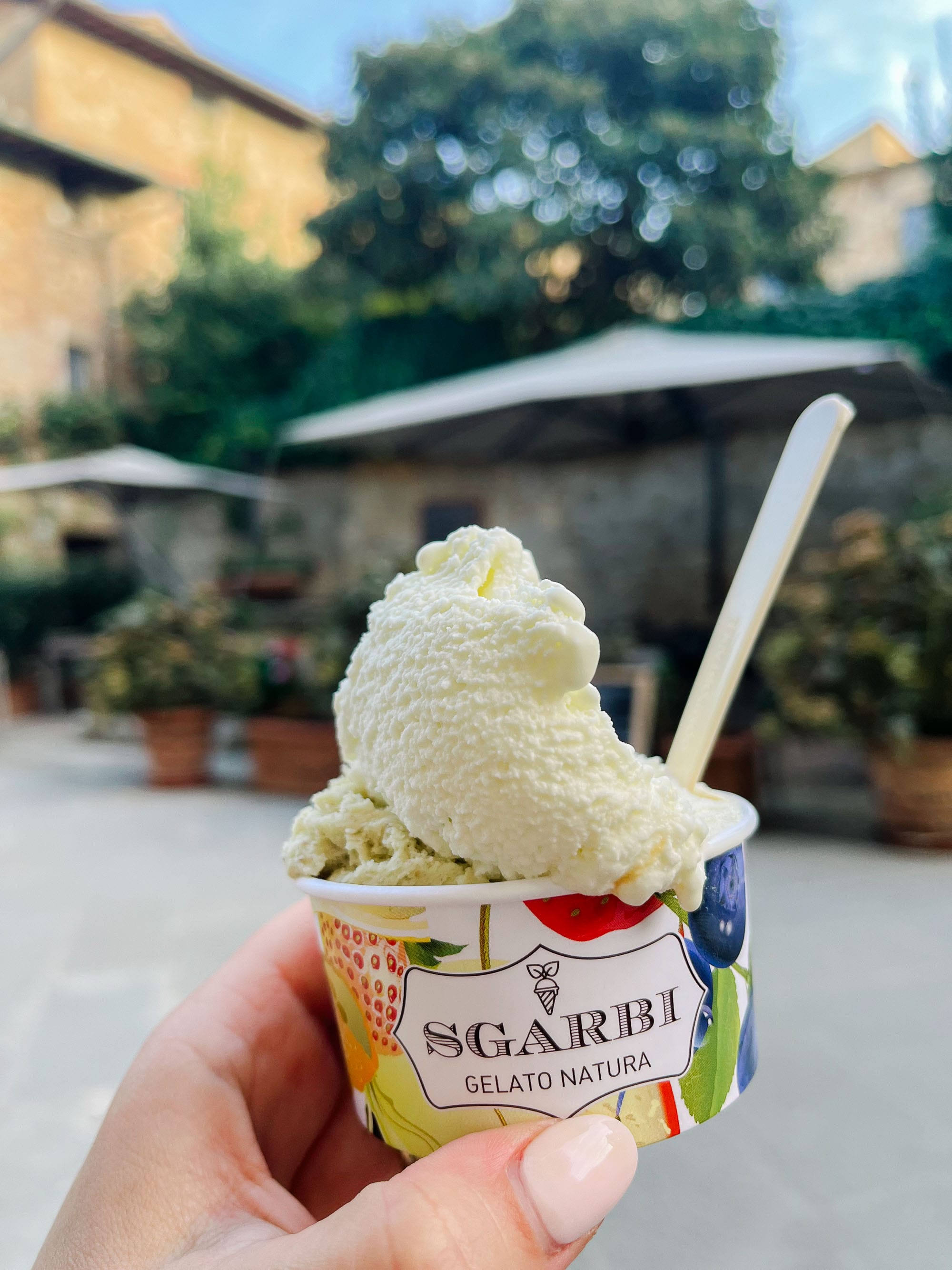
Buon Gusto Gelato
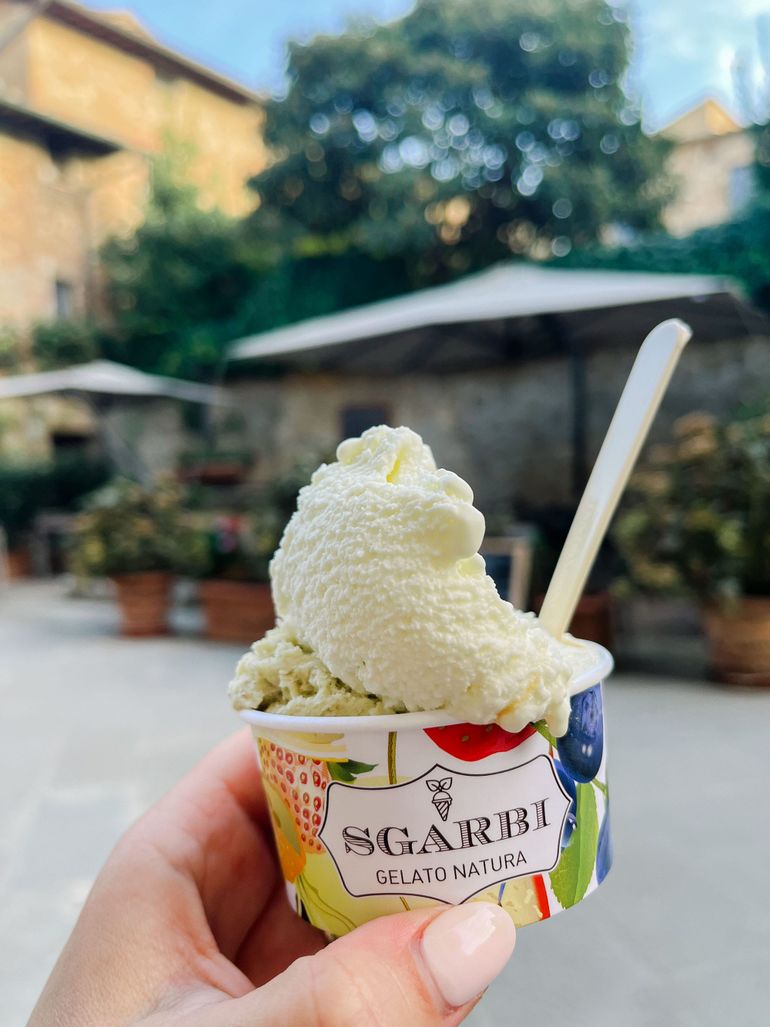
If you enjoy gelato as much as I do, don't miss Buon Gusto Gelato. This was some of the best gelato I had in Italy, and I'm still dreaming about their seasonal olive oil flavor!
What makes this little gelateria stand out is its focus on fresh, natural, and seasonal ingredients. The owner opened Buon Gusto in Pienza in 2012 with the idea of making fresh gelato using local and seasonal ingredients. The flavors change throughout the year, with creative combinations that go beyond the usual gelato classics.
I recommend stopping in while wandering the historic center. And if the olive oil flavor is available during your visit, definitely give it a try.
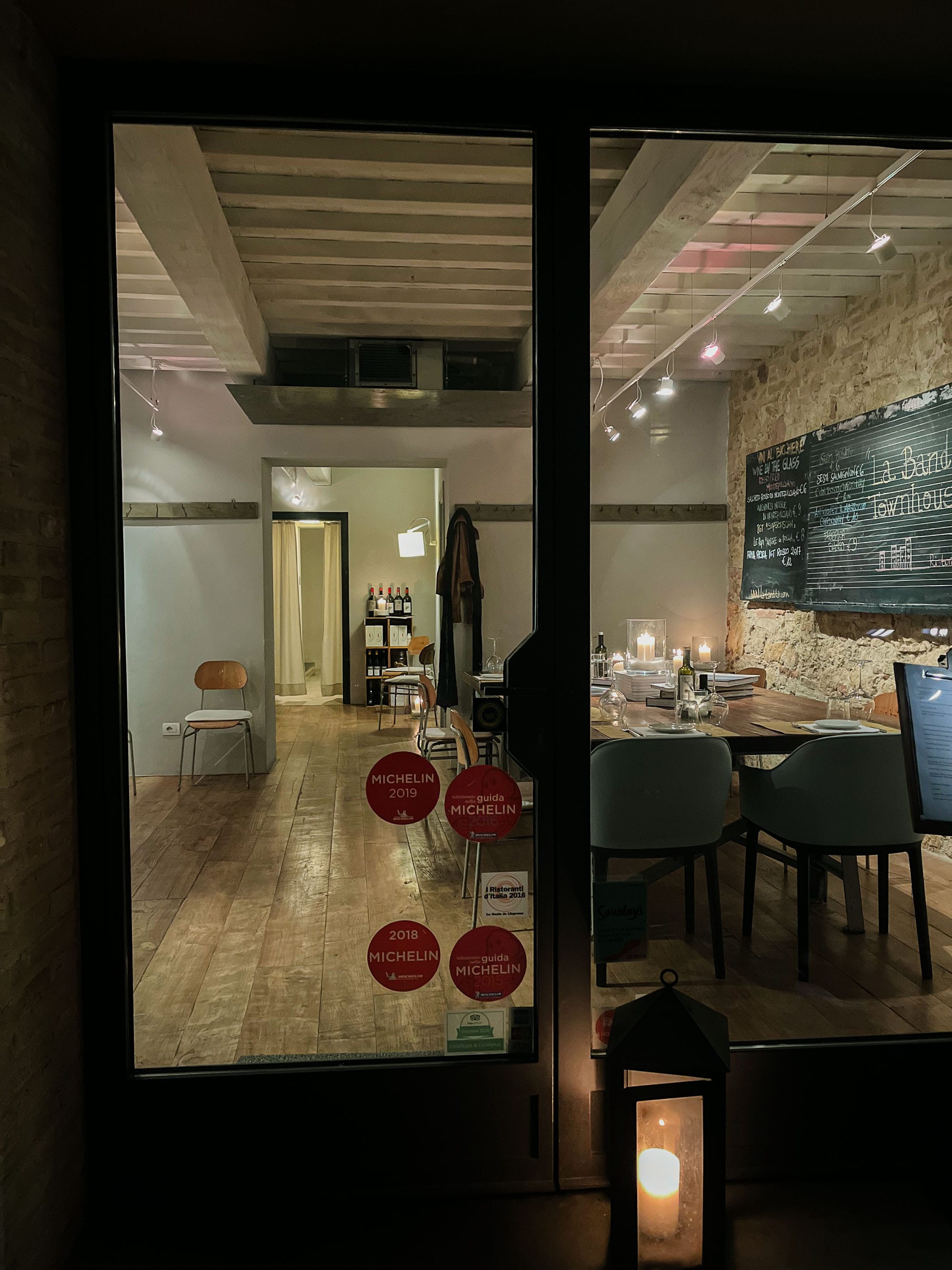
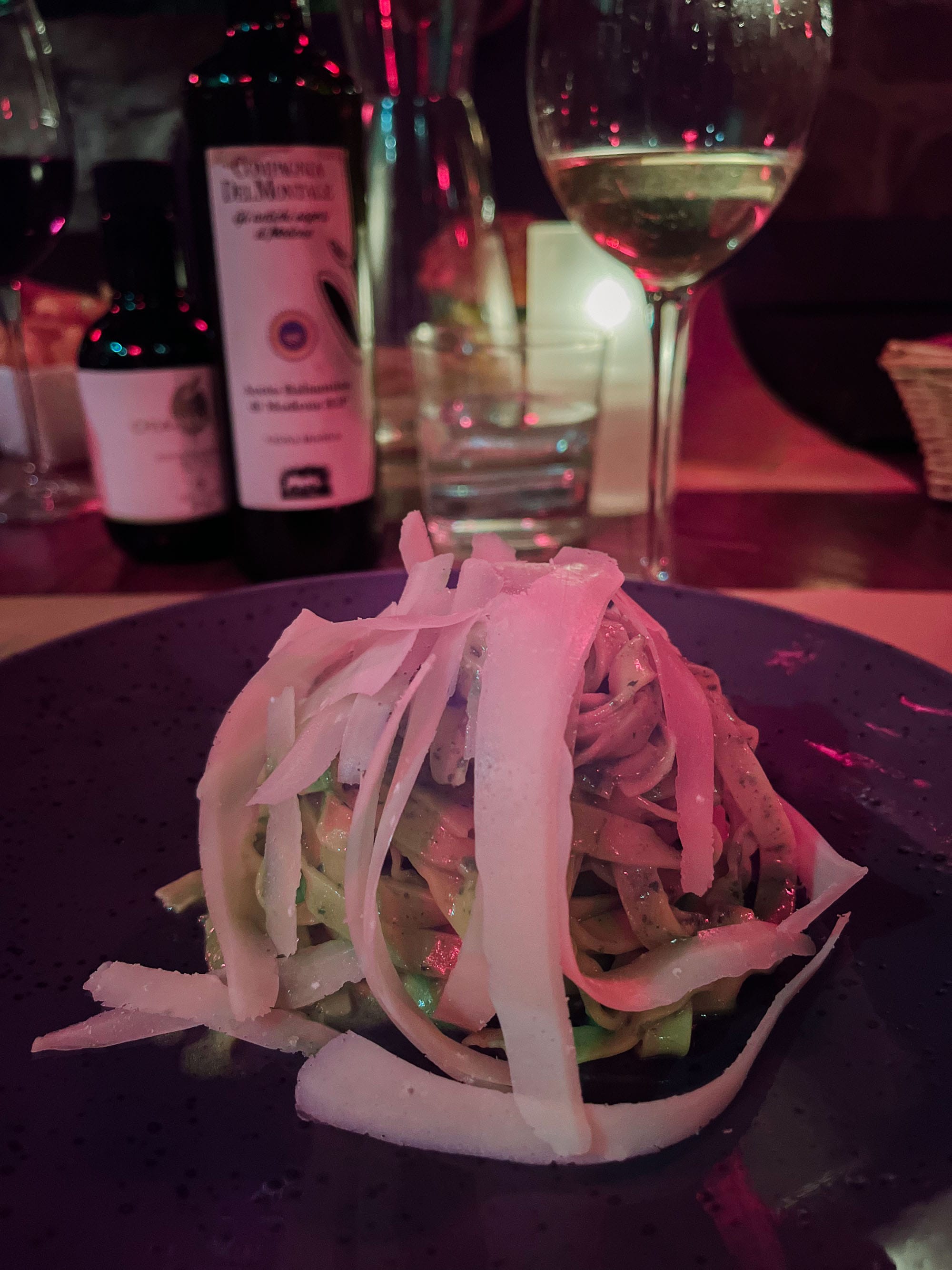
La Bandita Caffe at La Bandita Townhouse
One of the best dinners we had in Tuscany was on the patio at La Bandita Caffe, the restaurant at La Bandita Townhouse, a boutique hotel. They have incredible homemade fresh pasta dishes, as well as local, seasonal Tuscan fare.
If it's a nice day, consider asking for a seat on the patio!
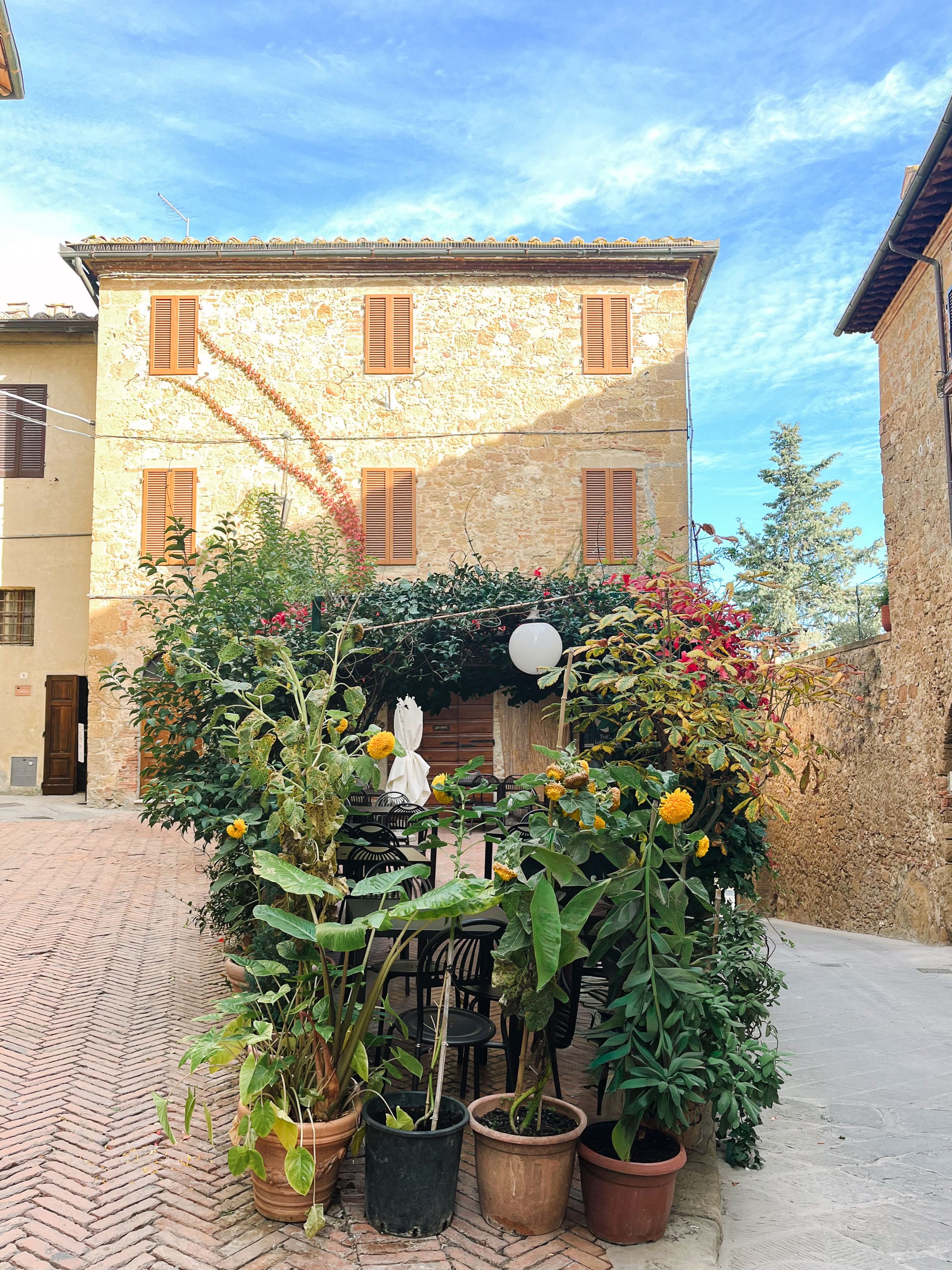
Trattoria Latte di Luna
For lunch, consider the beautiful plant-filled patio at Trattoria Latte di Luna!
The menu focuses on regional specialties, including handmade pici pasta, roasted meats, and dishes featuring Pienza's famous pecorino cheese. It's a lovely option for a relaxed lunch while exploring the historic center.
Where to Stay in Pienza
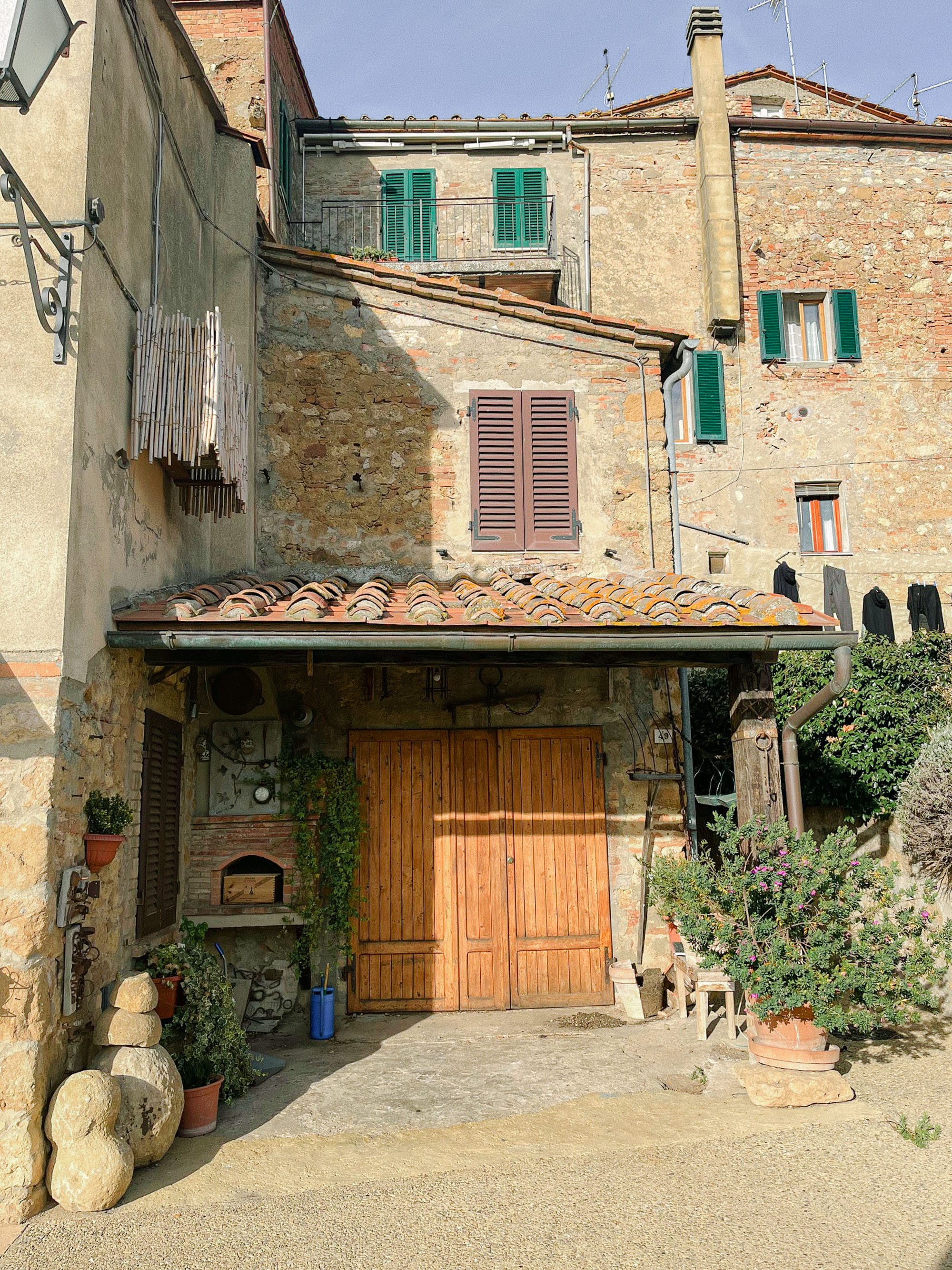
My husband and I stayed in Castelmuzio at La Moscadella, a beautiful boutique hotel that's a thirteen-minute drive from Pienza. I can't recommend it enough if you're looking for a special hotel in the Val d'Orcia region.
However, if you prefer to stay in Pienza, or at least closer to Pienza, consider La Bandita Townhouse.
We had such a great meal at La Bandita Caffe that we'd love to stay in their adjoining hotel in the future! They offer 12 luxury rooms in a gorgeous restored convent that's right in Pienza.
Final Thoughts on Pienza, Italy
I still think about my visit to Pienza and would love to return someday! One thing I particularly appreciated was how easy the town was to explore on foot. Unlike nearby Montepulciano, which has quite a few steep hills to navigate (although I love it, too!), Pienza is relatively flat and easy to walk around. Between its impressive town square, beautiful Renaissance architecture, ivy-covered buildings, and some standout restaurants, there's plenty to enjoy. If you're planning a trip to the Val d'Orcia, I definitely recommend adding Pienza to your itinerary!
Frequently Asked Questions About Pienza, Italy
Is Pienza, Italy worth visiting?
Absolutely! Pienza is one of my favorite stops in the Val d'Orcia and one of the prettiest little towns in Tuscany. I loved wandering the historic center, popping into the shops along Corso il Rossellino, and taking in the views of the surrounding countryside. It's also a great place to sample Pecorino di Pienza, and potentially purchase a wheel of it to bring home!
What is Pienza, Italy known for?
Pienza is best known for its beautiful Renaissance architecture, its connection to Pope Pius II, and its famous Pecorino cheese. The town was redesigned in the 15th century as an ideal Renaissance city, and much of that original architecture remains today. It's also a UNESCO World Heritage Site, thanks to its significance in Renaissance urban planning.
How long should you spend in Pienza?
You don't need more than a few hours to enjoy Pienza. I recommend allowing half a day if you want time to explore the historic center, visit Palazzo Piccolomini, browse the shops, and stop for lunch or gelato. If you're exploring the wider Val d'Orcia region, Pienza is easy to combine with a few other nearby towns.
What is the best time of year to visit Pienza?
I recommend visiting in late spring or early fall, when the weather is generally pleasant and the Tuscan countryside is especially beautiful. April through June is lovely for green rolling hills and wildflowers, while September and October are wonderful for a fall trip. Summer is popular, but July and August can be quite hot.
Can you visit Pienza without a car?
You can, but I recommend having a car if you want to explore more of the Val d'Orcia. Pienza itself is small and easy to explore on foot, but some of the region's prettiest spots, including Cappella della Madonna di Vitaleta, are outside town. I especially enjoyed driving between Pienza, Montepulciano, and Montalcino, where some of the best views are found along the roads connecting these little towns.
What food is Pienza famous for?
Pienza is famous for its Pecorino cheese, a traditional Italian cheese made from sheep's milk. You'll find plenty of shops throughout the historic center selling different varieties, and most are happy to let you sample before buying. We actually purchased an entire wheel to bring home! Just make sure you have enough room in your suitcase. We ended up buying an extra suitcase for ours, but it was worth it.
What are the best towns to visit near Pienza?
Pienza is ideally located for exploring the Val d'Orcia. Montepulciano, Montalcino, San Quirico d'Orcia, and Monticchiello are all worth visiting. I particularly enjoyed having a car so we could explore at our own pace and stop for photos along the beautiful country roads. I'd also make time for Cappella della Madonna di Vitaleta, one of the most photographed spots in Tuscany.
Where should you stay when visiting Pienza?
If you want to stay right in town, La Bandita Townhouse is a lovely option. It's a boutique hotel in a restored convent, and we had such a wonderful dinner at its restaurant, La Bandita Caffe, that I'd love to stay there on a future visit. We stayed just outside Pienza at La Moscadella in Castelmuzio, a beautiful boutique hotel that I can't recommend enough if you're looking for a special stay in the Val d'Orcia.
What are the best photo spots in and around Pienza?
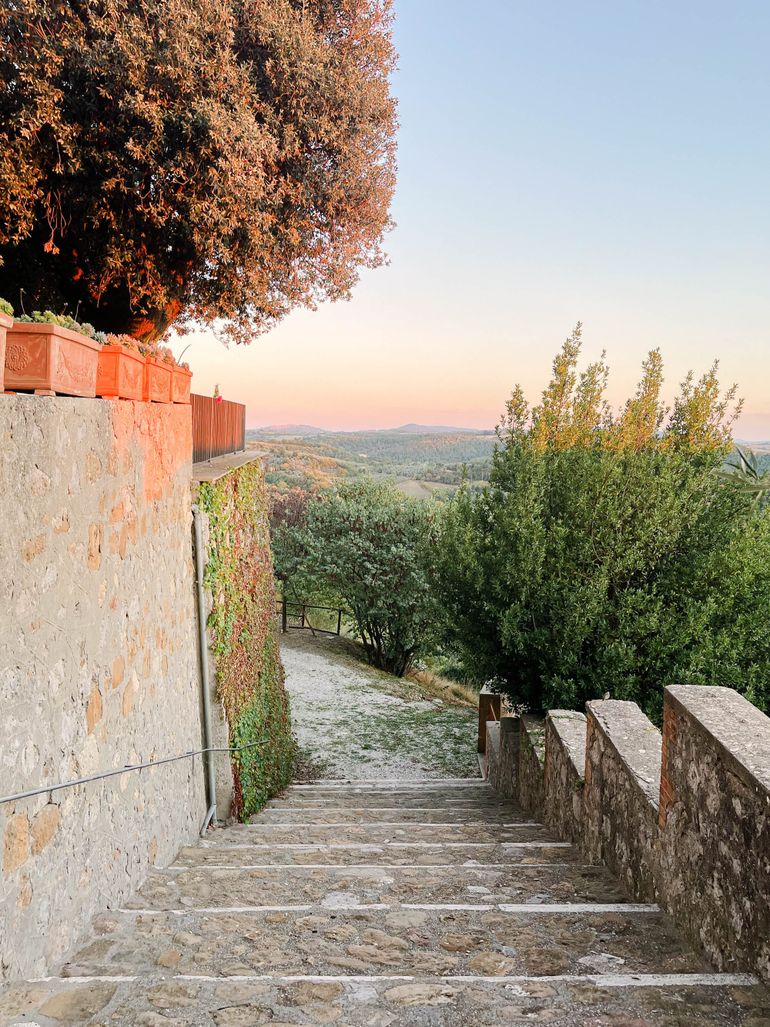
Pienza is incredibly photogenic, so you'll want to have your camera ready! Within town, I love the views from the historic walls overlooking the Val d'Orcia, as well as the pretty streets and Renaissance architecture around Piazza Pio II and Corso il Rossellino. Just outside town, don't miss Cappella della Madonna di Vitaleta, one of the most recognizable views in Tuscany. The scenic road between Pienza and San Quirico d'Orcia is also worth exploring, with its rolling hills, cypress-lined roads, and classic Tuscan farmhouses. If you have a car, give yourself extra time to stop along the way for photos!